Empathy as Data
On basing ideas on real knowledge, and empathy as a source of understanding.
Baboons in Cape Town used to sit on our lawn and pick on the ones smaller than them. Under stress, they became even more irrationally violent to each other. Abusive partners and parents do the same, taking out frustrations on the target least likely to hit back, or the one that offers the most emotional reward for provocation.
In the human version, people construct arguments to convince others. Not strong arguments, necessarily, but they have access to cognition for the argument and yet don’t use it to look for actual evidence, or for ways to solve the problem rather than assign blame. The solution may be known but too scary or personally risky to say. Sometimes the problem is simply with the power structures these people live under.
We all sometimes make this choice, to recruit intelligence in service of a conclusion already reached, rather than in service of finding out what is actually true. René Girard called this the “scapegoat mechanism”, describing how communities under stress resolve internal anxiety by projecting collective guilt onto a visible outsider. The most intractable, tragic part is that the mechanism apparently requires for participants to genuinely believe the victim is guilty. The meaning precedes and forecloses the evidence.
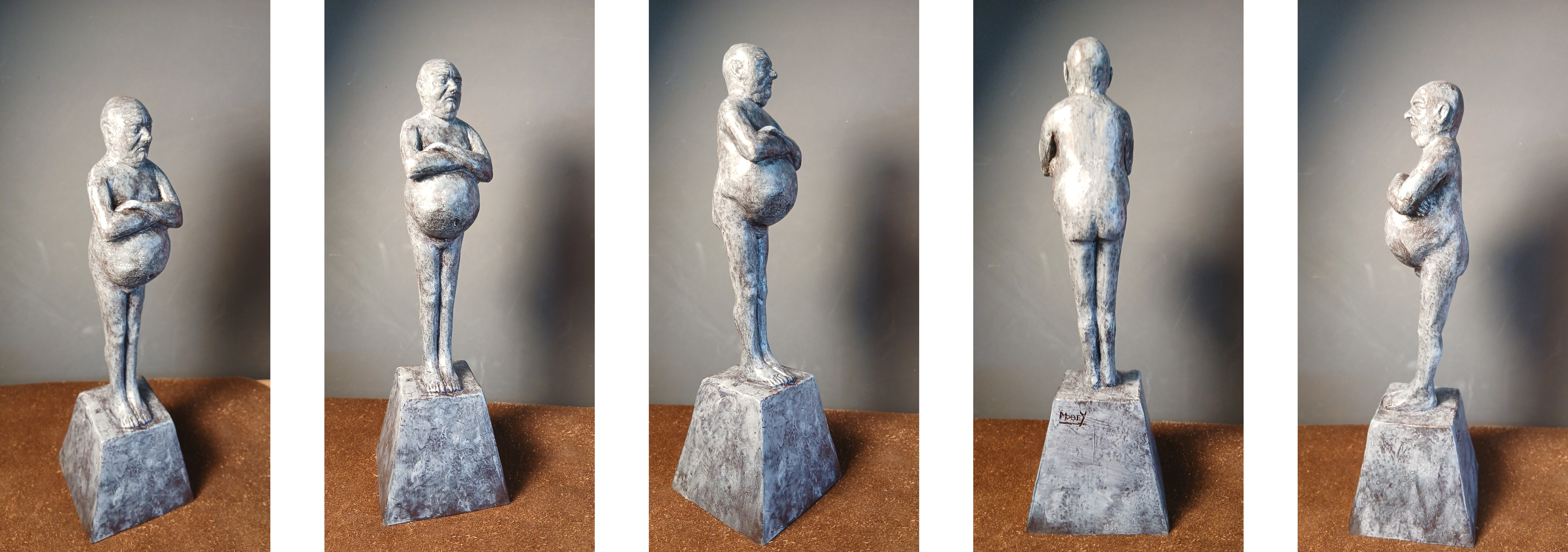
“Why Should I” is a personality type
Right after the Brexit vote came in, there was a moment. Before Theresa May rode “Brexit means Brexit” into power. Before Europe seriously believed the British would fall for the strange and sudden campaign. People were churning as they realised just how many of them hadn’t voted, just how wrong the campaign information was, and just how devastating the consequences would be. Many voters hadn’t seriously believed it would go through. When it did, there was a brief window where Britain could have backpedalled without losing too much face, prosecuted the disinformants, and saved a decade of expense, decline and political polarisation. That window closed.
The architects of the crisis were almost certainly funded by foreign, anti-European groups. The documentation of interference is extensive, if still contested. The Conservative government, however, saw the chance to consolidate power through high emotion and the seeming legitimacy of a democratic referendum, however rushed and ill-motivated. Their opponents could then be comfortably accused of being undemocratic, self-interested, unwilling to listen to the people. Economic arguments were deployed as emotional triggers. Immigration was scapegoated, never mind that their own international policies were driving the refugee flows they blamed, never mind that far more wealth was being extracted by foreign billionaires than by single working mothers from Somalia or Syria. The perpetrator assumes the victim’s position and the mechanism works because it moves faster than evidence.
“This attack, intended to chill and terrify, typically includes threats of law suits, overt and covert attacks on the whistle-blower’s credibility, and so on. The attack will often take the form of focusing on ridiculing the person who attempts to hold the offender accountable. […] [T]he offender rapidly creates the impression that the abuser is the wronged one, while the victim or concerned observer is the offender. Figure and ground are completely reversed. […] The offender is on the offense and the person attempting to hold the offender accountable is put on the defense.”
Jennifer j. Freyd, “Violations of Power, Adaptive Blindness and Betrayal Trauma Theory” (1997)
“Brexit means Brexit” became a thought-cancelling tautology. You cannot argue with a tautology. Similarly, “will of the people” made democratic revision structurally illegitimate, while “enemies of the people” criminalised dissent. Robert Lifton called this loaded language: the control of meaning-making through the control of vocabulary, making alternative meanings unspeakable. These phrases, along with “thought cancelling cliches”, have been used in many languages across history, right up to today. It is striking how reliably the will of the people is ignored when it wants the wrong things from those in power.
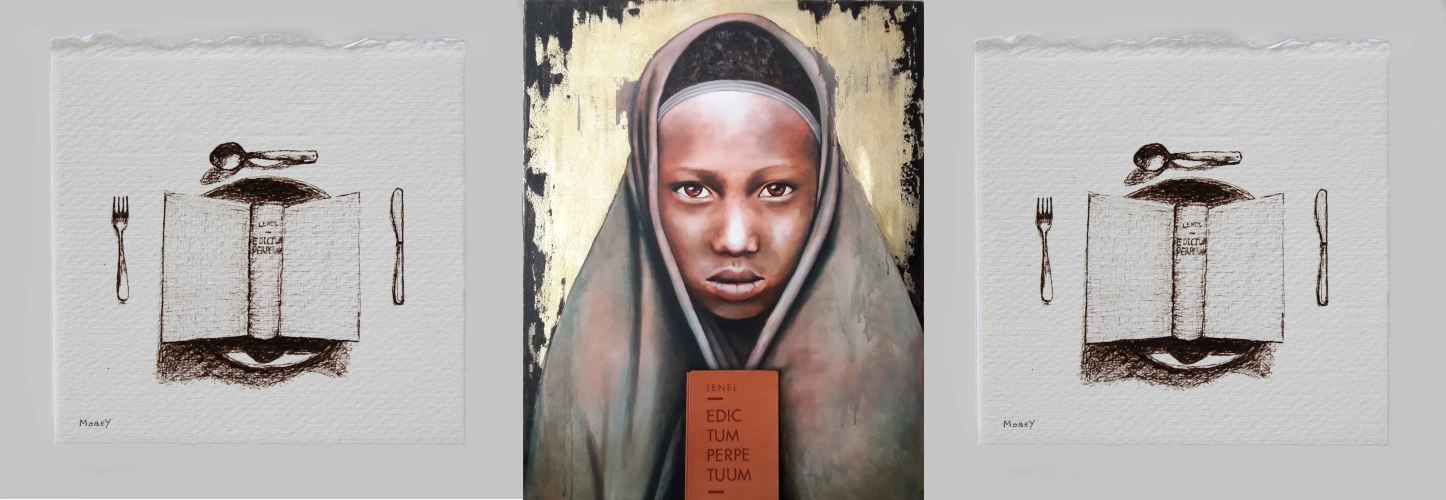
Everyone thinks their own law is the “Edictum Perpetuum”, but we’re all living in the outcome of every revolution that went before
“The basic tool for the manipulation of reality is the manipulation of words. If you can control the meaning of words, you can control the people who must use the words.”
Philip K. Dick, “How To Build A Universe That Doesn’t Fall Apart Two Days Later” (1978). Published in “The Shifting Realities of Philip K. Dick: Selected Literary and Philosophical Writings”, ed. Lawrence Sutin. Vintage Books, 1995.
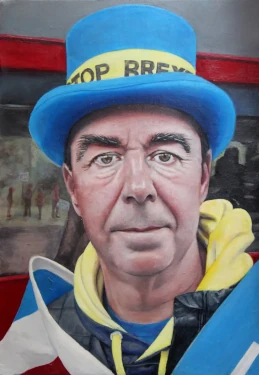
In 2019 I visited the UK, tentatively planning my migration there. I walked London until my hiking shoes needed new insoles. Most days I didn’t take my camera, but I did on the day I went specifically to the Houses of Parliament to try to understand the protesters. Both sides. I was living that month with a family who had voted Leave, and I was profoundly confused by their logic since none of the evidence seemed to match, even though they were perfectly intelligent people who prided themselves on being “intellectual”.
He looked tired and determined. A little silly with the bright blue top hat, but generally like someone who cared a great deal. His skin was ruddy from weeks outdoors. He was willing to engage and spoke competently on trade and defence issues. The painting is called Looks Like Steve Was Right. It is small, and cropped to get his hat in, and the raincoat. Through the windows of a passing bus, you can see the red-garbed pro-Brexit crowd, partially obscured. I did try to speak with them next but was met with a cold reception. They had noticed me talking to Steve first, I think.
I’m not sure I understand Steve. Or the “Brexit means Brexit” crowd either. But I probably wouldn’t bother to paint someone I’d already decided I understood. My identity is so tightly wound up in painting and art-making that any serious thinking or curiosity ends up on a canvas, or in clay.
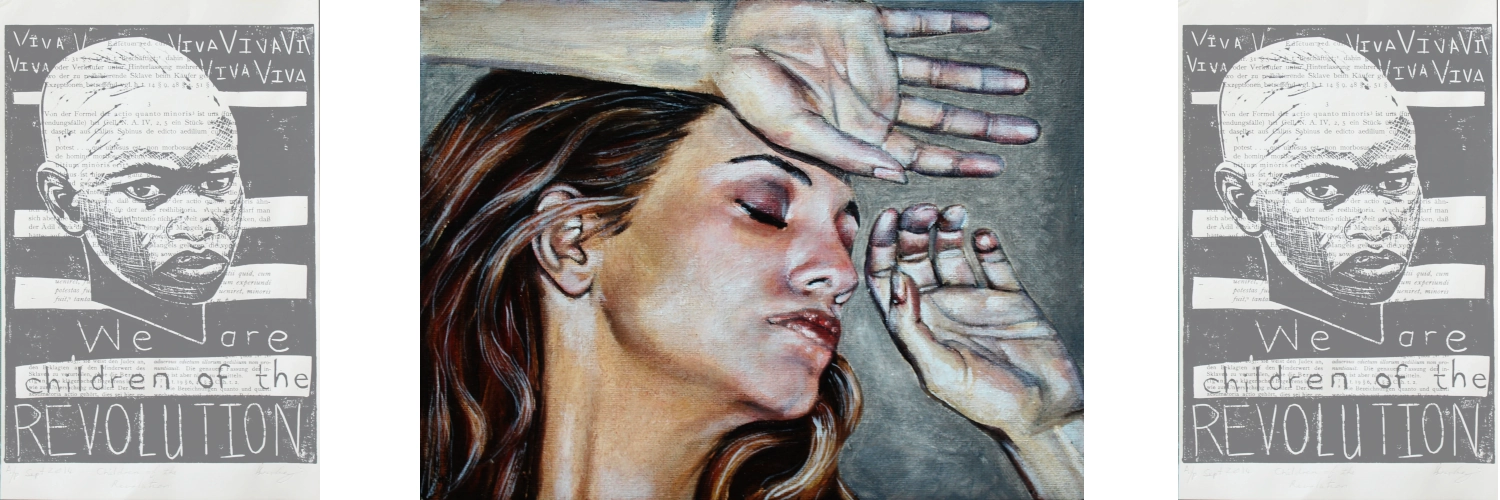
Everything always changes. Everything, for all of us.
If it arrives at all, when I paint, the understanding doesn’t arrive as a flash of insight. Rather, once the rough painting actually looks like a person and I am adding intimate details, the crease of a lip, the lacrimal caruncle; I have a visceral, tactile sense that this person pushes those fingers into that corner when they wake up, or cry, or laugh too hard.
There are better ways to gather evidence of other people’s realities, I’m sure. It’s an ongoing practice in many fields of study, from Tibetan Tonglen to longitudinal studies by the driest of academics.
Weirdly, it makes us all the same. Not in a bad way. Just that everyone is the subject, looking out from within this skin, whatever shape that skin is.
When someone stands in front of a portrait, mine or anyone else’s, I want them to touch their own face. To feel the corner of their own lip when they look at the corner of the painted mouth, feel their own fingertips through the painted lips.